
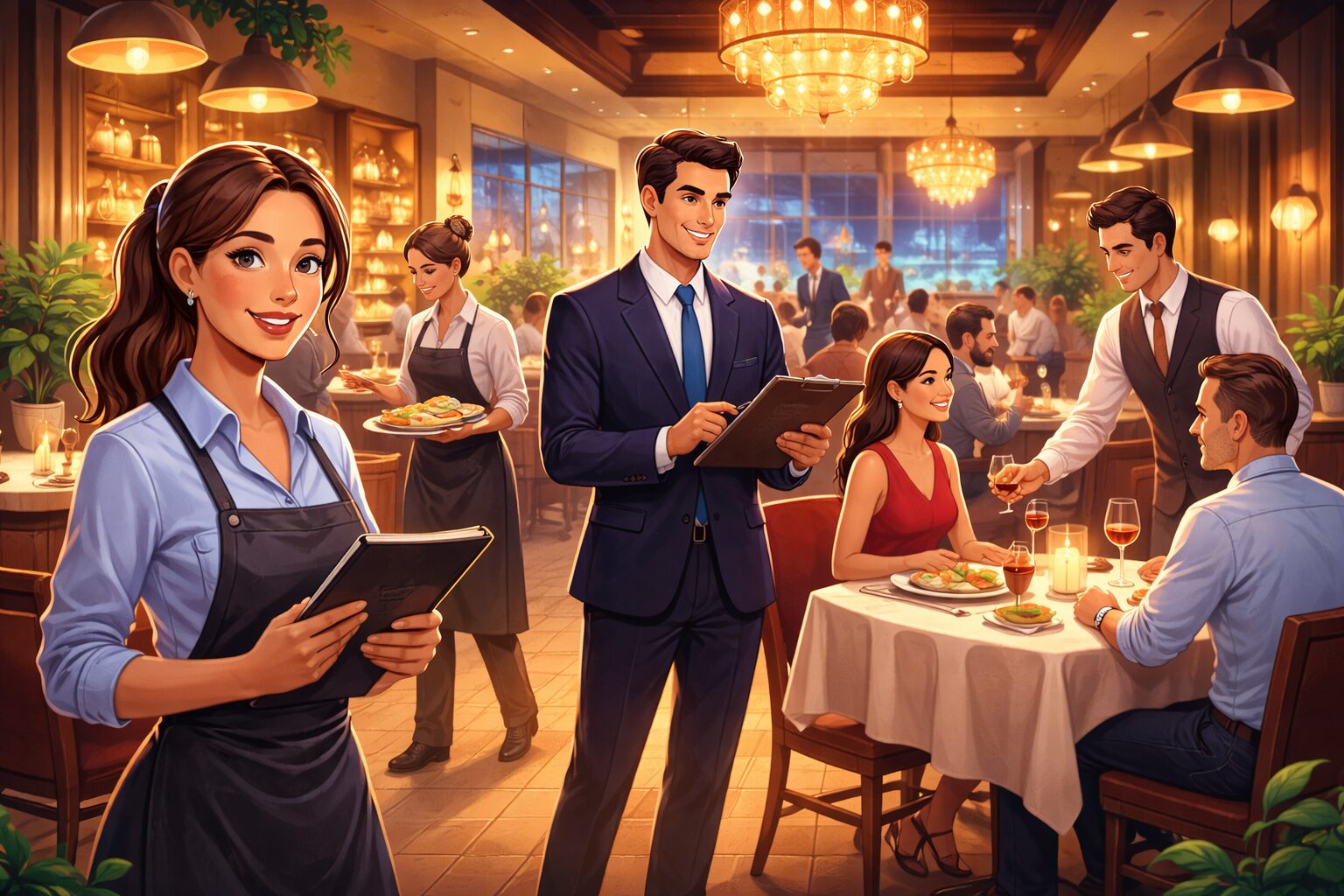

The Magic of Restaurant Front of House Mastery
There is a moment in every great restaurant — a moment so subtle most guests don’t consciously notice it — when everything flows. The door opens at just the right time. A warm smile lands before a word is spoken. Water appears before thirst. The right wine arrives as if summoned by instinct. That moment isn’t luck, it’s Front-of-House mastery.
Behind every seamless dining experience is a team trained with intention, supported by intelligent systems, and led by someone who understands that hospitality is not service — it’s theatre, psychology, leadership, and heart. It’s the magic of restaurant front of house mastery.
Let’s step behind the curtain.
What Is Front of House?
The Front of House (FOH) includes everything your guests notice, from what they see, hear, and feel when they arrive at your restaurant to what they notice after they leave. Understanding these roles is important because it helps staff feel valued and know how their work affects how guests view the experience.
It includes:
- Hosts and hostesses
- Servers and bartenders
- Floor managers
- The bar, lobby, and dining room
- The energy, pace, tone, and atmosphere
If the kitchen is like the engine of a car, then the Front of House is like the steering wheel. It helps to guide how people see the restaurant. A well-cooked steak won’t make up for slow or cold service. However, great service can turn even a simple meal into a wonderful experience, making the staff feel proud of what they do.
Front of House is where revenue is protected, reputations are built, and loyalty is earned. Recognising this can inspire staff to take ownership and feel motivated about their role.

Staffing & Training: Building a Culture That Breathes Hospitality
Staffing & Training: Building a Culture That Breathes Hospitality requires intentional efforts to embed hospitality values into every aspect of your team’s development and daily interactions. You cannot “manage” Front of House like a checklist.
You cultivate it like a garden.
To create a warm and welcoming atmosphere, it’s important to have good training programs. These programs should teach both the skills needed for the job and the right attitude. This way, your team can go beyond just following basic rules. Great service starts with understanding, not just memorising scripts.
Train your team in:
- Standard operating procedures (SOPs)
- Deep product knowledge (ingredients, allergens, wine pairings)
- Storytelling about dishes
- Emotional intelligence
A server who knows why certain wines go well with specific dishes sells with confidence. A host who understands how to manage course timing prevents problems before they occur.
Knowing the right things gives you power.
Having power makes people trust you.
Trust leads to more sales.
2. Empowerment: Trust Creates Magic
Micromanagement hurts hospitality. When staff are empowered, they can create wonderful experiences.
Let your team handle small issues immediately—like giving a free dessert for a missed anniversary or replacing a drink without asking the manager.
When staff feel trusted, they take ownership of their work. And guests can sense this.
3. Pre-Shift Rituals: Align Before You Perform
Before every service, gather your team around.
Review:
- VIP bookings
- Specials
- Large parties
- Service goals
- Potential challenges
These meetings aren’t administrative — they are energising. They unify the team and set the tone.
A scattered team creates scattered service.
A focused team creates fluid service.
4. Proactive Service: Anticipate, Don’t React
The difference between good and unforgettable?
Anticipation.
Train staff to:
- Greet within seconds
- Maintain eye contact
- Refill water without prompting
- Notice body language
- Pace courses thoughtfully
When guests never have to ask, they feel cared for — not served.
Restaurant Management Guide – How To Best Manage A Successful Restaurant
Making Use of Technology & Tools
Technology should never replace hospitality.
It should amplify it.
1. Modern POS Systems: Speed Equals Satisfaction
Today’s point-of-sale systems allow:
- Mobile ordering at the table
- Faster payment processing
- Instant kitchen communication
- Real-time sales tracking
When orders flow directly to the kitchen display system (KDS), errors decrease and timing improves.
Guests may never see your POS system — but they feel its efficiency.
2. Smart Reservation Management
Reservation software like ResDiary allows you to:
- Manage bookings with precision
- Reduce no-shows
- Capture guest data
- Identify repeat customers
- Forecast busy periods
Data is power.
Knowing that a returning guest prefers a window seat or always orders a particular bottle of wine transforms service from generic to personal.
Personalisation is the future of hospitality.
3. FOH and BOH Synchronisation
Front of House and Back of House must operate as one organism.
When FOH systems sync seamlessly with kitchen display systems:
- Order mistakes decrease
- Food arrives hot
- Timing becomes consistent
- Stress levels drop
Technology, when aligned correctly, removes friction — and friction is the enemy of excellence.

Improving Operations & Service Flow
Even the most charismatic team cannot overcome poor systems.
Structure creates freedom.
1. Control Guest Flow
Smart seating is strategic.
Balance:
- Server sections
- Kitchen capacity
- Turnover times
- Walk-ins vs reservations
Overloading one section while another stands idle creates chaos. Balanced seating maintains energy without overwhelming staff.
Flow equals profit.
2. Relentless Quality Control
Guests equate cleanliness with competence.
- The lobby
- The bar
- The restrooms
- The menus
Every detail communicates standards.
A manager who walks the floor constantly — adjusting chairs, greeting tables, observing service rhythm — sets the tone without saying a word. Presence is powerful leadership.
3. Complaint Resolution: Turn Problems Into Loyalty
Here is a truth many ignore:
A complaint handled brilliantly often creates more loyalty than a flawless meal.
Train staff to:
- Listen fully
- Apologise sincerely
- Take ownership
- Offer a solution immediately
Never argue.
Never deflect.
Never blame the kitchen.
Speed matters. Grace matters more.
Handled well, a dissatisfied guest becomes your strongest advocate.
4. Continuous Improvement: Excellence Is Never Finished
Review performance regularly.
Ask:
- Where are we slowing down?
- What feedback keeps repeating?
- Are we overstaffed or understaffed at certain times?
- What do our team members suggest?
Your staff often know the answers before management does.
Listening is leadership.
Restaurant General Manager’s Competencies: Unlimited Drive For Results
Leadership: The Invisible Force
Front of House reflects its manager.
If you are calm under pressure, your team remains steady.
If you are punctual, professional, and present, they mirror you.
The best FOH managers:
- Walk the floor constantly
- Greet guests personally
- Support overwhelmed staff
- Solve problems quietly
- Praise publicly and coach privately
They do not hide in the office.
They lead from the front.
Creating a Great Customer Experience: The Final Ingredient
A great dining experience is not about perfection.
It’s about emotion.
Guests remember:
- How quickly they were welcomed
- Whether someone noticed their celebration
- If staff seemed genuinely happy
- Whether the evening felt effortless
When Front of House operates at its best, guests leave feeling valued — not processed.
They return.
They recommend.
They forgive small mistakes.
Because they felt something.
And that feeling is intentional.
Related articles:
Restaurant General Managers Competencies
Monday Routine For Restaurant Managers
What Is Management In A Restaurant
Maximise Profit In A Restaurant
Conclusion: The Ultimate Truth
Managing the Front of House in a restaurant is more than just assigning tables or following rules. It’s a creative process that brings together diverse elements to deliver a great guest experience.
Front of House is where revenue meets reputation. It is where systems meet smiles.
Where training meets instinct. Where leadership meets pressure.
Master it — and your restaurant doesn’t just serve meals. It creates loyalty.
The staff doesn’t just work together; they become a lively team of storytellers, inviting guests to enjoy the dining space’s atmosphere. Each interaction is meaningful, turning short moments into lasting memories that guests will remember long after their meal.
When training is thorough and enjoyable, when technology enhances the guest experience, when communication is open and clear, and when leaders are supportive and motivating, something wonderful happens: the restaurant transforms into a space where everyone collaborates to make guests happy. Both customers and staff feel joy and satisfaction.
Your restaurant stops being a place where people eat.
It becomes a place they experience.
And that is how you wow your guests — every single service.
FAQ’s
What Is the 10–5 Rule in Restaurants?
The 10–5 rule is a simple but powerful hospitality standard:
- At 10 feet: Make warm eye contact and smile.
- At 5 feet: Verbally greet the guest.
That’s it.
But don’t underestimate its power.
Hospitality is emotional timing. When a guest walks through your door, they are subconsciously asking:
- Am I welcome here?
- Did I choose the right place?
- Will I be taken care of?
The 10–5 rule helps us connect with others before they even talk.
When someone is 10 feet away, a smile can make them feel less nervous. When they get to 5 feet, a warm greeting helps to create a bond.
For example, you might say: “Good evening! Welcome! We are really happy to see you.”
It’s important to say this with a friendly voice and to pay attention to the person, not looking somewhere else.
When everyone—like hosts, servers, bartenders, and managers—does this, the whole restaurant feels friendly and welcoming.
And the best part? It doesn’t cost anything!
But it changes everything.
How Do You Wow a Guest in a Restaurant?
You don’t wow guests with fireworks.
You wow them with awareness.
Here’s how:
1. Anticipate Before They Ask
Make sure to fill the water pitcher before the glass is empty. To keep your guests happy, offer them a drink before they finish their current drink. When the meal is almost over, quietly show the dessert menu so they don’t have to ask. This kind of attention makes your guests feel special and is very much appreciated.
2. Personalise the Experience
Notice details.
- Anniversary? Write a handwritten note.
- First visit? Offer guidance with enthusiasm.
- Returning guest? Remember their favourite table.
When service becomes personal, it becomes memorable.
3. Fix Problems Fast and Gracefully
Something will go wrong. It usually does.
The best surprise often comes when you fix the problem.
A genuine apology is important.
Take quick action to make it right.
Do something nice to show you care.
When you handle mistakes in a good way, people will trust you more than if everything were always perfect.
4. Lead With Energy
Energy is powerful. When a team has a clear goal, keeps a positive attitude, and communicates effectively, it creates a feeling of safety for guests. It makes them feel knowledgeable that capable individuals are assisting them. This confidence creates a friendly, welcoming atmosphere that makes the experience better for everyone.
5. Surprise Them
A small amuse-bouche.
A complimentary dessert for a celebration.
A manager stopping by to say, “We’re grateful you chose us tonight.”
Unexpected generosity creates stories.
Stories create repeat customers.

How Do You Run Front of House in a Restaurant?
Running Front of House is like conducting an orchestra.
Everyone must play in rhythm — but someone must hold the baton.
Here’s the blueprint:
1. Start With Structure
- Clear sections for servers
- Defined service standards
- Pre-shift meetings before every service
- Assigned side work responsibilities
Clarity reduces chaos.
2. Control the Flow
Smart seating prevents:
- Kitchen overload
- Server burnout
- Long ticket times
Stagger reservations wisely.
Balance sections fairly.
Never seat the entire dining room at once just because you can.
Pacing protects experience.
3. Be Visible
The best FOH managers don’t hide in the office.
They:
- Greet tables
- Watch timing
- Support overwhelmed staff
- Solve issues before they escalate
Presence builds authority — and trust.
4. Train Relentlessly
Hospitality is a skill.
Train for:
- Product knowledge
- Upselling techniques
- Body language awareness
- Complaint handling
- Wine and pairing suggestions
When staff are confident, service flows naturally.
5. Measure and Improve
Review:
- Sales per head
- Table turn times
- Guest feedback
- Staff feedback
Continuous refinement separates average restaurants from exceptional ones.
What Are Typical Front of House Duties?
Front of House is everything the guest sees and experiences.
Typical duties include:
Guest Interaction
- Greeting and seating guests
- Taking food and drink orders
- Recommending menu items
- Handling payments
- Addressing concerns
Service Management
- Monitoring table timing
- Delivering food and drinks
- Clearing and resetting tables
- Maintaining service flow
Environment Maintenance
- Keeping the lobby clean and welcoming
- Ensuring dining areas are spotless
- Checking restrooms regularly
- Maintaining presentation standards
Communication
- Relaying orders accurately to the kitchen
- Coordinating with bar staff
- Informing management of issues
- Updating team members on special requests
Sales and Upselling
- Suggesting appetisers, desserts, and wine pairings
- Promoting specials
- Encouraging return visits
In short:
Front of House duties are not just operational. They are emotional, every interaction either builds or erodes trust.
How To Unveil The Secrets Of Effective Restaurant Management