


Improving Restaurant Profitability
Food costs can make or break a restaurant’s profitability. Even restaurants with strong sales can struggle financially if inventory, purchasing, and menu pricing are not properly managed.
Understanding the restaurant food cost percentage formula helps owners, managers, chefs, and hospitality professionals make informed decisions about pricing, inventory control, and operational efficiency. This guide explains how to calculate the food cost percentage, interpret the results, compare industry benchmarks, and implement strategies to improve profit margins.
Key Takeaways
- Food cost percentage shows how much money is spent on food compared to how much food is sold.
- Most restaurants aim for a food cost percentage between 28% and 35%.
- Keeping track of what food you have is very important for making correct calculations.
- Menu engineering is a way to make more money without making customers unhappy.
- Checking food costs regularly helps spot problems like waste, theft, spoilage, and portion sizes.
- Looking at food costs every week gives you quicker information than checking once a month.
- Using restaurant management software can help make calculations easier and improve the accuracy of reports.
How To Calculate Food Cost Percentage
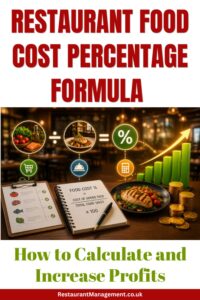
Food cost percentage is one of the most important restaurant financial metrics because it shows how much of every sales pound is spent on food ingredients.
Definition of Food Cost Percentage
Food cost percentage measures the cost of ingredients used to produce menu items compared to the revenue generated from food sales.
In simple terms, it answers this question:
How much am I spending on food to generate each pound of food revenue?
For example, if a restaurant spends £3,000 on food and generates £10,000 in food sales, its food cost percentage is 30%.
Tracking this metric helps operators understand whether food purchasing, menu pricing, and inventory management are aligned with profitability goals.
Why Food Cost Percentage Matters
Food cost management directly impacts restaurant profitability.
Benefits include:
- Better pricing decisions
- Improved inventory control
- Stronger gross profit margins
- Reduced waste and spoilage
- More accurate forecasting
- Increased operational efficiency
Food Cost Percentage vs Food Cost
Many operators confuse food cost with food cost percentage.
| Metric | Meaning |
| Food Cost | Total money spent on ingredients |
| Food Cost Percentage | Food cost relative to food sales |
A restaurant spending £20,000 monthly on food is not necessarily inefficient. What matters is how much revenue those ingredients generate.
That is why the food cost percentage is a more useful KPI than raw food costs alone.
Restaurant Food Cost Percentage Formula Explained
Basic Restaurant Food Cost Percentage Formula
The standard restaurant food cost percentage formula is:
Food Cost Percentage = (Cost of Goods Sold ÷ Food Sales) × 100
This formula calculates the percentage of food sales consumed by ingredient costs.
Breaking Down the Formula
Cost of Goods Sold (COGS)
Cost of Goods Sold represents the actual value of food inventory used during a specific period.
COGS includes:
- Meat
- Produce
- Dairy
- Dry goods
- Beverages if included in inventory
Total Food Sales
Food sales refer to revenue generated from menu items before accounting for expenses.
Inventory Calculations
Accurate inventory counts ensure reliable food cost calculations.
Many operators perform weekly inventory counts to maintain precision.
Formula Example
Assume a restaurant has:
- Food Cost = £8,000
- Food Sales = £25,000
Calculation: (£8,000 ÷ £25,000) × 100 = 32%
Formula Breakdown
| Metric | Amount |
| Food Cost | £8,000 |
| Food Sales | £25,000 |
| Food Cost % | 32% |
A 32% food cost percentage means the restaurant spends 32 pence on ingredients for every pound earned in food revenue.
Restaurant Margins – The Ultimate Guide to Boosting Revenue & Efficiency
How to Calculate Actual Food Cost
Understanding actual food cost begins with inventory management.
Beginning Inventory
Beginning inventory is the value of food stock available at the start of the accounting period.
Purchases During Period
This includes all food purchases made during the selected timeframe.
Examples:
- Produce orders
- Meat deliveries
- Dry goods purchases
- Specialty ingredients
Ending Inventory
Ending inventory represents the value of food remaining at the end of the period.
Actual Food Cost Formula
Actual Food Cost = Beginning Inventory + Purchases − Ending Inventory
Example Calculation
Assume:
- Beginning Inventory = £5,000
- Purchases = £10,000
- Ending Inventory = £4,000
Calculation: £5,000 + £10,000 − £4,000 = £11,000
Actual Food Cost Example
| Item | Amount |
| Beginning Inventory | £5,000 |
| Purchases | £10,000 |
| Ending Inventory | £4,000 |
| Actual Food Cost | £11,000 |
This figure becomes the Cost of Goods Sold used in the food cost percentage formula.

Ideal Food Cost Percentage vs Actual Food Cost Percentage
What Is Ideal Food Cost?
Ideal food cost assumes perfect execution.
It is based on:
- Recipe costing
- Standard portions
- No waste
- No spoilage
- No theft
What Is Actual Food Cost?
Actual food cost reflects real-world operations and includes all inefficiencies.
Why the Difference Matters
The gap between ideal and actual food cost often reveals operational problems.
A large variance may indicate:
- Excessive waste
- Inventory shrinkage
- Over-portioning
- Theft
- Supplier issues
Causes of Variances
Common reasons include:
- Food waste
- Theft
- Spoilage
- Poor inventory practices
- Portion control issues
Ideal vs Actual Food Cost
| Metric | Ideal Cost | Actual Cost |
| Waste Included | No | Yes |
| Theft Included | No | Yes |
| Portion Errors Included | No | Yes |
| Operational Accuracy | Theoretical | Real-World |
Monitoring both metrics helps managers identify improvement opportunities
Average Restaurant Food Cost Percentage Benchmarks
Food cost targets vary by restaurant concept.
Full-Service Restaurants
Most casual dining establishments target food costs between 28% and 35%.
Fast Food Restaurants
Fast food operators often achieve lower food costs due to standardised processes and high-volume purchasing.
Typical range: 25%–30%.
Cafes and Coffee Shops
Coffee shops generally benefit from high-margin beverage sales.
Typical range: 20%–30%.
Fine Dining Restaurants
Premium ingredients and complex preparation often increase food costs.
Typical range: 30%–40%.
Industry Benchmarks
| Restaurant Type | Average Food Cost % |
| Fast Food | 25–30% |
| Casual Dining | 28–35% |
| Fine Dining | 30–40% |
| Coffee Shop | 20–30% |
Benchmarks should guide decision-making, but every operation has unique cost structures.
How to Reduce Food Cost Percentage in Restaurants
Lowering food costs requires consistent operational discipline.
1. Improve Inventory Management
Inventory control prevents over-ordering and identifies slow-moving stock.
Best practices include:
- Weekly inventory counts
- FIFO inventory rotation
- Automated inventory tracking
2. Reduce Food Waste
Food waste directly reduces profits.
Strategies include:
- Cross-utilising ingredients
- Tracking waste daily
- Forecasting demand accurately
3. Optimise Supplier Relationships
Strong vendor relationships can improve:
- Pricing
- Delivery schedules
- Product consistency
Review supplier contracts regularly and compare market rates.
4. Train Staff on Portion Control
Even small portion inconsistencies can significantly increase costs.
Use:
- Portion scales
- Recipe cards
- Standardised serving tools
5. Monitor Food Costs Weekly
Monthly reporting often identifies problems too late.
Weekly reviews provide faster corrective action.
6. Use Restaurant Management Software
Modern restaurant technology helps automate:
- Inventory management
- Cost tracking
- Purchasing
- Reporting
Automation reduces human error and improves visibility into restaurant expenses.
Menu Engineering and Food Cost Optimisation
What Is Menu Engineering?
Menu engineering is the process of analysing menu items based on profitability and popularity.
The goal is to maximise revenue while maintaining customer satisfaction.
High-Profit Menu Items
Items with strong popularity and profitability should receive prominent placement on menus.
Low-Profit Menu Items
Low-margin products may require:
- Recipe adjustments
- Price increases
- Removal from the menu
Menu Design Strategies
Effective menu engineering often includes:
- Strategic placement
- Highlight boxes
- Premium item positioning
- Descriptive menu language
Menu Engineering Matrix
| Category | Popularity | Profitability |
| Stars | High | High |
| Puzzles | Low | High |
| Plow Horses | High | Low |
| Dogs | Low | Low |
Restaurants should focus on promoting Stars while improving or replacing Dogs.

Common Food Cost Percentage Mistakes Restaurant Owners Make
1. Ignoring Inventory Counts
Without accurate inventory data, food cost calculations become unreliable.
2. Over-Ordering Ingredients
Excess inventory increases spoilage risk and ties up cash flow.
3. Inaccurate Portion Sizes
Lack of standardisation can dramatically increase food costs.
4. Not Tracking Waste
Untracked waste often becomes a hidden profitability issue.
5. Poor Pricing Decisions
Underpricing menu items may increase sales volume but reduce overall profit margins.
Successful managers regularly evaluate menu pricing against ingredient costs.
Best Restaurant Food Cost Calculators and Software
Technology simplifies food cost management.
1. Toast POS
Offers integrated inventory tracking, reporting, and menu analysis.
2. Restaurant365
Provides accounting, inventory management, and restaurant performance analytics.
3. MarketMan
Focuses on inventory control, purchasing, and food cost monitoring.
Combines POS functionality with inventory and reporting capabilities.
5. MarginEdge
Automates invoice processing and food cost reporting.
Software Comparison
| Software | Inventory | Reporting | Cost Tracking |
| Toast POS | Yes | Yes | Yes |
| Restaurant365 | Yes | Advanced | Yes |
| MarketMan | Yes | Yes | Advanced |
| Lightspeed | Yes | Yes | Yes |
| MarginEdge | Yes | Advanced | Advanced |
Selecting the right platform depends on restaurant size, complexity, and budget.
Profit Margins by Restaurant Type: How to Maximise Your Profitability
Restaurant Food Cost Percentage Formula Examples
1. Small Café Example
- Food Cost: £3,000
- Food Sales: £12,000
Food Cost Percentage: 25%
2. Fast Food Restaurant Example
- Food Cost: £18,000
- Food Sales: £70,000
Food Cost Percentage: 25.7%
3. Fine Dining Example
- Food Cost: £35,000
- Food Sales: £100,000
Food Cost Percentage: 35%
4. Multi-Location Restaurant Example
Chain operators often calculate food cost percentages separately by location to identify operational differences and benchmark performance.
Comparing locations can reveal opportunities for purchasing efficiencies and process improvements.
Frequently Asked Questions
What is the ideal food cost percentage for a restaurant?
Most restaurants target between 28% and 35%, although the ideal percentage varies by concept and menu mix.
How often should restaurants calculate food cost percentage?
Weekly calculations provide the most actionable insights and help identify issues before they significantly impact profitability.
What is a good food cost percentage for a café?
Most cafés and coffee shops operate within a range of 20% to 30%.
How can restaurants reduce food waste?
Implement inventory controls, train staff on portioning, track waste, and improve sales forecasting.
What software helps calculate food cost percentage?
Popular options include Toast POS, Restaurant365, MarketMan, Lightspeed, and MarginEdge.
Why is my actual food cost higher than my ideal food cost?
Common causes include waste, spoilage, theft, inaccurate portion sizes, and inventory discrepancies.
Does food cost percentage include labour costs?
No. Food cost percentage focuses exclusively on ingredient costs relative to food sales.
What is the difference between food cost and food cost percentage?
Food cost is the total amount spent on ingredients, while food cost percentage measures those costs relative to revenue generated.
Key Insights
- Food cost percentage is one of the most valuable restaurant KPIs.
- The standard formula is: (COGS ÷ Food Sales) × 100.
- Most successful restaurants maintain food costs between 28% and 35%.
- Accurate inventory management is essential for reliable calculations.
- Menu engineering significantly influences profitability.
- Weekly monitoring helps detect operational issues early.
- Technology can streamline food cost management and reporting.
Related articles:
Profit Margins By Restaurant Type
Conclusion
The food cost percentage is an important metric that helps restaurant owners see how well they are using their money for ingredients to make sales. By calculating this number often, they can learn key information about how to earn a profit, set prices, manage their food supplies, and keep the restaurant in good financial shape.
Successful restaurants do more than just think about how much they spend on food. They also take steps to keep their costs in check. This means they look at their inventory regularly, ideally weekly and they choose their ingredients carefully. They cut down on waste, serve the right amounts, and plan their menus thoughtfully. All these things help them earn more money.
No matter what type of restaurant you are running, whether it’s a small café, a fast food place, a fancy dining restaurant, or a group of restaurants, managing food costs is very important. You should start by checking your food cost percentage every week, comparing it to industry standards, and looking for ways to operate more efficiently. Making small changes consistently can lead to big improvements in profitability over time.