

Introduction
Running a successful restaurant involves meticulous financial planning, good food and great customer service. A profitable restaurant needs a well-organised budget. This budget helps owners and managers control costs, manage cash flow, and make smart business decisions. Restaurant budgeting is one of the most important aspects of restaurant management because it provides a clear picture of where money comes from, where it is spent, and how much profit remains at the end of each month.
Many restaurant owners focus heavily on sales while overlooking the financial systems needed to support long-term growth. Growing your restaurant’s income doesn’t always mean you will make a profit. Rising costs for food, staff, utilities, rent, and prices from suppliers can quickly reduce profits if you don’t keep track of spending. A restaurant budget is like a map for your finances. It helps you see potential problems before they happen and makes sure you use your resources wisely. Whether you are starting your first restaurant, running a small café, or managing several locations, a good budget helps you make better choices, stay financially stable, and build a strong base for future growth. A budget isn’t about holding back growth. It’s about making sure every pound has a purpose.
What Is Restaurant Budgeting and Why Does It Matter?
Restaurant budgeting is the process by which a restaurant plans and tracks how much money it makes and spends. This process helps the restaurant reach its financial goals. It includes estimating how much money will come in, predicting costs, tracking what is actually happening with the money, and making changes as needed throughout the year. A well-prepared budget helps restaurant owners understand exactly how much money is needed to operate the business while identifying opportunities to improve profitability.
Without a budget, restaurants often find themselves reacting to financial issues instead of preventing them. Sometimes, things that you do not expect can create money problems, like higher food prices, staff shortages, broken tools, or changes in seasons. Making a budget can help you handle these surprises. A budget is a simple plan that helps you decide how to spend and save your money wisely. It also enables restaurant owners to evaluate whether menu prices are appropriate, staffing levels are sustainable, and marketing investments are generating a return.
Budgeting is equally important for securing funding from lenders or investors. Financial institutions typically want to see evidence that restaurant owners understand their costs and have a realistic strategy for generating profit. A detailed budget demonstrates financial discipline and shows that management has a clear plan for growth and sustainability.
Understanding the Core Components of a Restaurant Budget
Every restaurant should have a clear budget that shows all the money coming in and going out. First, you estimate how much money you expect to earn. This helps you understand how much money the restaurant will have over a certain time period. Sales forecasts should be based on realistic assumptions, historical performance, market conditions, seating capacity, and average customer spend rather than overly optimistic estimates.
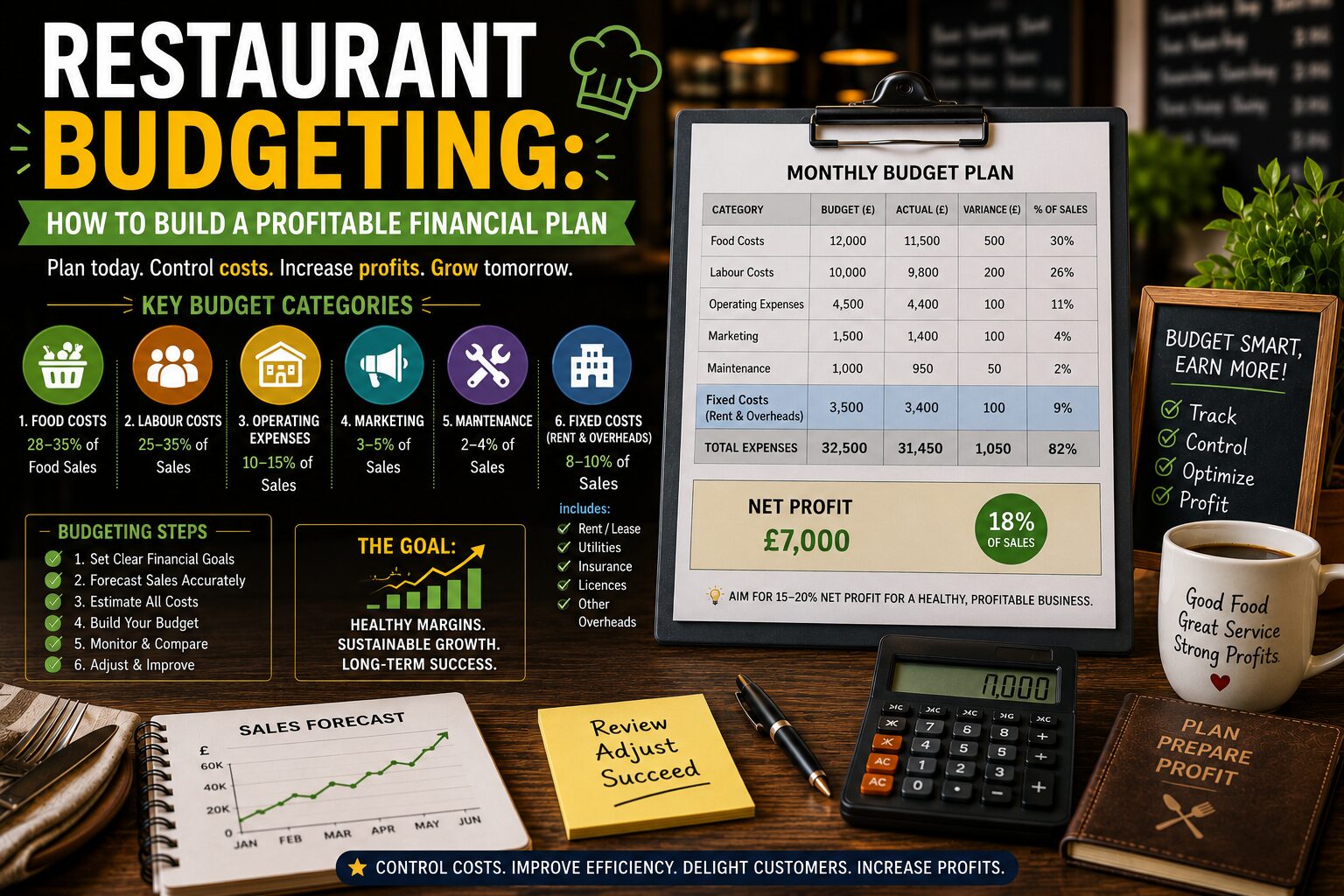
Expense categories generally include food costs, beverage costs, labour expenses, occupancy costs, marketing, utilities, insurance, maintenance, technology subscriptions, and administrative expenses. Food and labour typically represent the highest operating costs for most restaurants, making them critical areas for monitoring and control. Understanding how each expense category contributes to overall costs helps owners identify inefficiencies and opportunities for improvement.
Another important component is cash flow planning. Profitability and cash flow are not the same thing. Even if a restaurant looks like it is making money when you look at its financial reports, it can still have big problems with cash flow if it doesn’t manage its money well. Creating a detailed budget helps the restaurant save enough cash to cover its bills, especially when sales decline. This strategic financial planning is essential for maintaining operational stability and mitigating risks throughout the fiscal year.

Creating a Restaurant Startup Budget
One big mistake that new restaurant owners often make is not realising how much money they need to start. When planning a budget for a new restaurant, it’s important to consider all costs. This includes paying the lease, fixing up the place, buying equipment, and getting the supplies needed to open. Startup costs can vary a lot based on where you are, what type of business you want to start, and how big it will be. To avoid unexpected expenses when launching your business, it’s important to plan carefully. When starting a new business, you need to think about many costs.These can include:
– Money for securing a property (like a deposit)
– Fees for legal help
– Costs for getting licenses
– Kitchen tools and equipment
– Furniture for the restaurant
– Technology systems for operations
– Branding and signs
– Creating a website
– Marketing your business
– Hiring staff
– Training employees
– Buying initial inventory (like food and drinks)
Many business owners forget how important it is to manage working capital well. This is the money needed to pay for daily costs until the restaurant starts making a steady profit.
A conservative approach is generally the safest. Adding extra money into the startup budget helps protect against surprises like delays, extra building costs, or sales that are not as high as hoped during the first few months. Successful restaurant owners know that keeping cash is just as important as making money when starting the business.
Managing Restaurant Training: 14 Actionable Tips You Need To Know
Managing Food Costs Through Effective Budgeting
Food costs directly affect how much money restaurants make, so they are carefully monitored in any budget. To manage food costs well, restaurants must keep track of their inventory, calculate menu prices correctly. Each menu item should have a clear recipe and a calculated food cost percentage to meet profit goals.
Regular inventory checks can help identify waste, theft, over-portioning, and buying mistakes. Even small errors can add up over time and seriously impact profit margins. Monitoring supplier pricing and reviewing purchasing agreements regularly can also help control costs without compromising quality.
Menu engineering plays an important role in food cost management. Restaurant owners and managers can make their menus better by looking at sales data to find out which dishes people like the most. Having a good budget plan helps them see how their food choices affect their money. This information helps them make smarter decisions so they can run their business well and be successful for a long time. A budget isn’t just a record of expenses; it’s an important tool that helps them use their resources wisely and increase their profits.
Labour Budgeting and Workforce Planning
Labour costs are a big part of spending in the restaurant business. To create a good labour budget, it’s important to strike the right balance between providing great customer service and running the restaurant efficiently. If you schedule too many staff members, you will overspend on payroll. On the other hand, if you have too few workers, it can lead to bad service, lower sales, and tired employees.
Successful labour budgeting begins with forecasting demand. Historical sales data, reservations, seasonal trends, local events, and weather patterns can all influence staffing requirements. Managers who understand these patterns are better positioned to schedule employees effectively while controlling labour costs.
Training also plays a significant role in labour efficiency. Well-trained employees do their tasks better, make fewer mistakes, and help improve customer satisfaction. Cross-training staff gives restaurants more flexibility. This method helps businesses adjust to changes while keeping payroll costs low. When planning labor costs, it’s important to not just save money, but also to give workers the tools they need to make sure guests have a good experience every time.

Building a Cash Flow Budget That Protects Your Business
Managing cash flow is very important for restaurants. It can be the main reason some restaurants do well while others struggle to stay open. Even profitable restaurants can experience financial difficulties; if money coming in and going out is not managed carefully, it can lead to financial problems. A cash flow budget helps operators anticipate periods when expenses may exceed available funds and take action before problems arise.
Cash flow forecasting involves estimating when money will enter and leave the business over a specific period. Revenue projections should account for seasonal fluctuations. When making expense forecasts, it’s important to include both fixed costs, like rent, and variable costs, such as your inventory purchases. Knowing these figures helps restaurant owners plan better and avoid running out of cash.
Maintaining an emergency reserve is another important aspect of cash flow planning. Sometimes things can go wrong, like when machines break down, need repairs, or when suppliers have problems. Changes in the economy can also happen. It’s important to have some extra money saved up. This money can help you stay stable when times are tough and keep you from having to take expensive loans in a hurry. Additionally, effective cash flow management empowers restaurant owners with increased confidence and flexibility, enabling them to make informed strategic decisions.
Technology and Restaurant Budgeting
Using technology in managing money and budgets for restaurants is very important now. Advanced cash register systems, smart inventory management software, comprehensive payroll programs, and robust accounting tools help restaurant owners track their finances in real time. These tools provide useful data, making it easier to predict costs, control spending, and make better decisions in the fast-changing food service industry.
Instead of relying solely on spreadsheets, restaurant owners can access detailed reports that help identify trends and opportunities for improvement.
Inventory management systems such as Crunchtime for Sales forecasting or Restaurant 365 for all-in-one restaurant management are just two examples to help keep track of food use and reduce waste. They are very important for knowing how much food is available and making sure we don’t throw away too much. Meanwhile, labour management platforms optimise scheduling by aligning it with sales forecasts. Financial dashboards offer immediate access to key performance indicators, including food cost percentage, labour cost percentage, average transaction value, and profit margins.
Technology does not replace good financial management, but it can make processes much more accurate and efficient. Restaurants that use data effectively are usually better positioned to respond quickly to changes in the economic climate and maintain tighter control of their finances.
Common Restaurant Budgeting Mistakes to Avoid
Restaurants often face financial problems due to budget errors, mainly because they expect to make more money than they actually do. When restaurant owners expect to earn a lot but do not, they can end up overspending and running out of cash.
One big mistake is not regularly checking how well the restaurant is doing financially. A budget should be updated and changed as the market changes. By reviewing finances monthly, owners can catch discrepancies early, allowing them to fix small issues before they become big problems.
Also, some costs that restaurant owners don’t pay much attention to can add up and hurt their business over time. Small expenses like subscription services, changes in utility bills, repairs, and wasteful purchases of supplies might not seem important, but they can add up and hurt profits.
Good restaurant owners understand that closely monitoring their finances is essential to success and growth in a competitive market.
How to Review and Improve Your Budget Throughout the Year
A restaurant budget is an important tool that should be checked regularly, not just once a year. To work best, it is a good idea to review the budget monthly. This helps restaurant owners see how well they are doing compared to their plans. These reviews provide valuable information about how well they are meeting their revenue goals and keeping expenses in check.
By carefully comparing what was budgeted with what actually happened, restaurant managers can identify trends, spot new opportunities, and recognise potential problems. For example, if the price of food rises more than they expected, restaurant owners may need to adjust menu prices or how they source ingredients. If the cost of workers rises faster than the money they earn, they should find better ways to schedule their staff and use their workers. By keeping a close eye on these things, restaurant owners and managers can make smart choices based on facts instead of just guesses.
Moreover, budgeting should align with the restaurant’s long-term goals. As restaurants grow, their financial goals will change, making it crucial to review budgets regularly. This ensures they stay on track with their business aims and support steady growth. By having a strong review process as part of their budget plan, restaurant operators can better manage their finances and improve operational efficiency.
Conclusion
Making a budget for a restaurant is very important. Restaurant budgeting helps owners and managers see how much money they have and how to run the restaurant well. A good budget helps restaurant owners understand what is happening in their business, make smart choices, track money coming in and going out, and ensure they are earning a good profit. By understanding their costs, predicting how much money they will make, and carefully monitoring key performance metrics, restaurant operators can stay flexible and adapt to market changes, strengthening their business.
The best restaurants don’t always have a lot of money. They succeed by understanding their costs, using what they have wisely, and managing their money. Whether you are starting a new restaurant or trying to improve an existing one, creating a good budget is very important. This helps you build a stronger, more successful business.
Key Restaurant Budgeting Checklist
Before Creating Your Budget
- Define financial goals
- Review historical sales data
- Assess current expenses
- Forecast revenue realistically
Monthly Budget Reviews
- Review food costs
- Review labour costs
- Monitor cash flow
- Analyse profitability
- Compare actual vs projected figures
Quarterly Financial Planning
- Evaluate menu profitability
- Review supplier contracts
- Assess staffing efficiency
- Adjust financial forecasts
Read Further
- Restaurant Food Cost Percentage Formula: How to Calculate and Increase Profits
- Restaurant Business Plan Template: That Will Make You Money 2026
- Profitable Restaurant Operation: Cutting Costs Without Sacrificing Quality
- Why Fast Food Remains Profitable Business Opportunity
- The 7 Most Profitable Restaurant Foods To Skyrocket Your Profits